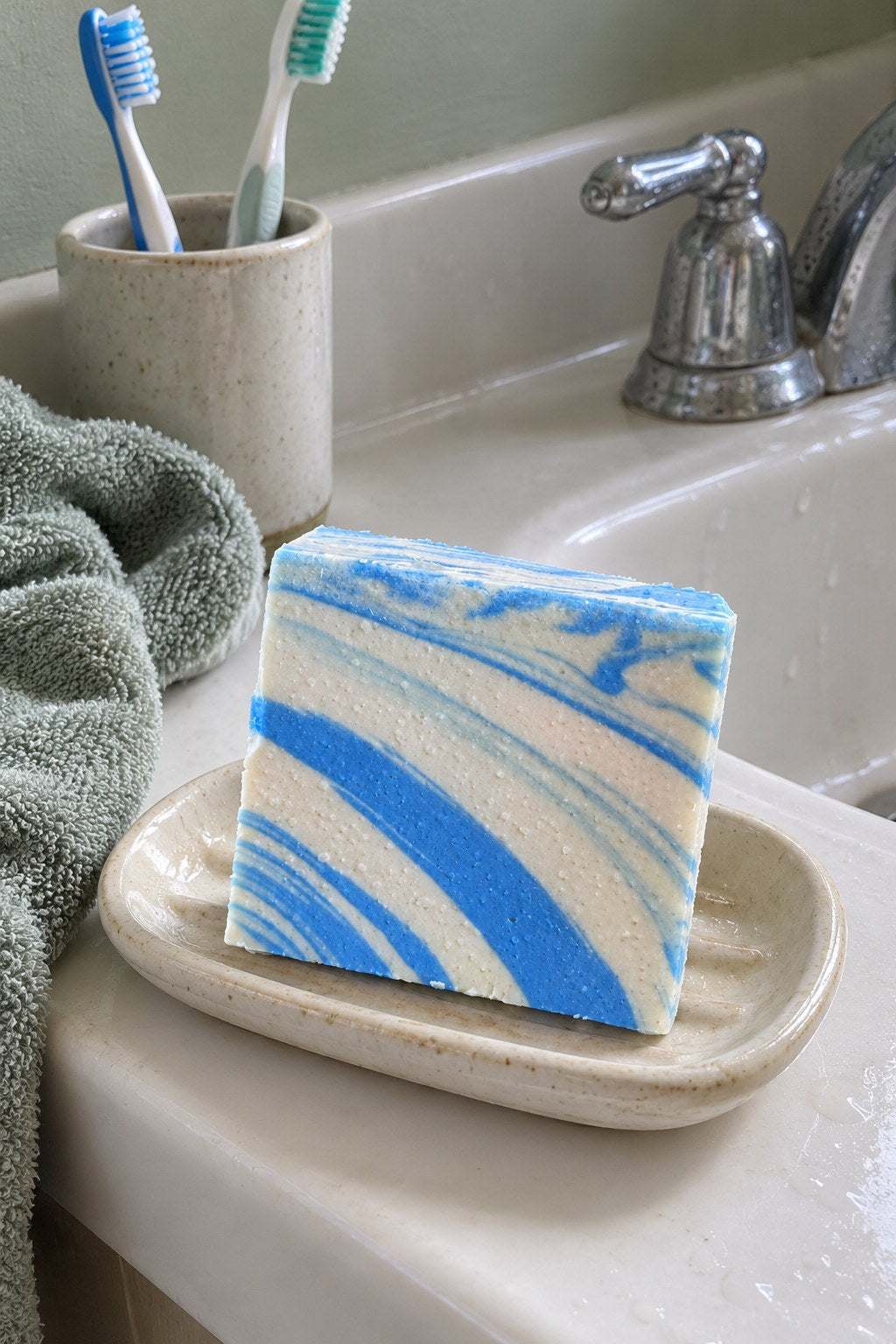
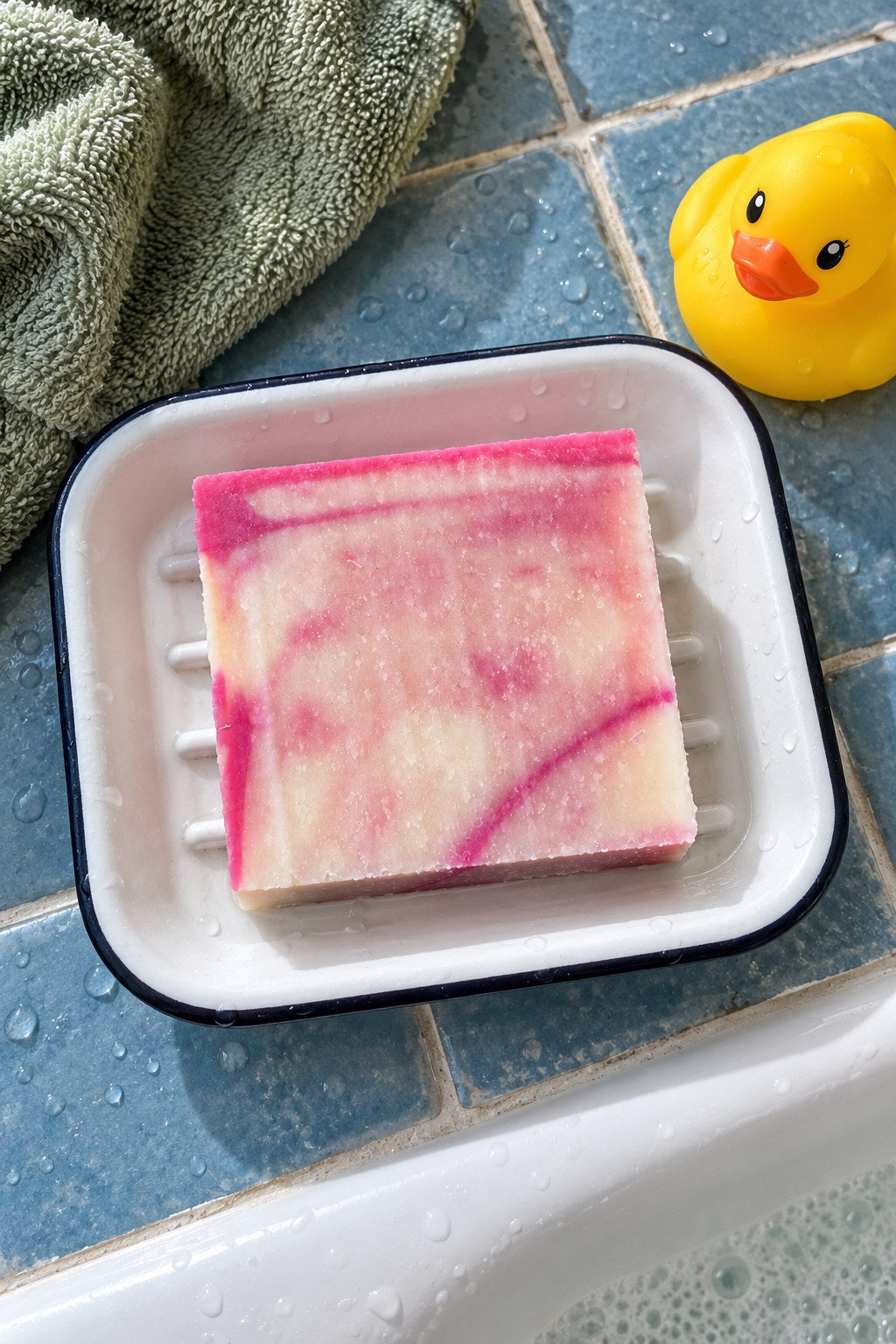
SLS (sodium lauryl sulfate) is an inexpensive detergent that makes products foam. It's considered safe in products you rinse off, but it's known to irritate some people's skin, especially with daily use. That's why many people with dry or sensitive skin feel better after switching to SLS-free products.
When I started reading the backs of the products in our bathroom, SLS was on almost all of them. Body wash, shampoo, bubble bath, even the toothpaste. So what is it, and should you care?
What SLS does
SLS is a surfactant, which is a fancy word for an ingredient that helps oil and water mix so dirt and grease rinse away. It's also excellent at making foam, and it's cheap. That combination is why it's in so many products.
The catch is that it doesn't know the difference between the grease you want gone and the natural oils your skin needs. It's very good at removing both.
Is SLS dangerous?
You may have seen scary claims online about SLS. There isn't good evidence that it causes cancer or other serious illness, and safety reviewers consider it fine in rinse-off products.
The real issue is irritation. SLS is irritating enough that skin researchers actually use it on purpose in studies when they need to irritate skin in a controlled way. Not everyone reacts to it, but if your skin is dry, sensitive or prone to flare-ups, daily exposure can add up.
SLS vs. SLES: what's the difference?
You'll also see sodium laureth sulfate (SLES). It's a close cousin that's been processed to be milder. Many people tolerate it better than SLS, though it's still a strong cleanser.
How to spot it
Look for these names on the ingredient list:
- Sodium lauryl sulfate (SLS)
- Sodium laureth sulfate (SLES)
- Ammonium lauryl sulfate
Ingredients are listed from most to least, so if one of these is in the first few, it's doing most of the cleaning.
Who might want to avoid it
- People whose skin feels tight, itchy or dry after showering
- People with sensitive or reactive skin
- Anyone with a dry, itchy scalp
- People who get irritation around the mouth from toothpaste (worth asking your dentist about an SLS-free option)
What to use instead
There are plenty of gentler options. Traditional soap made from oils and butters cleans without SLS. For shampoos, look for "sulfate-free" formulas that use milder cleansers, often made from coconut or other plant sources.
The easiest test is how your skin feels afterward. Clean should feel comfortable and soft, not tight and squeaky.

What we use in our house
The Routine
Goat’s-milk body bars with no SLS, plus a face bar and a shampoo bar. Handmade on our farm in small batches.
See the Routine →
Lauren Stewart makes Tyme Soap by hand on our family farm in Idaho, with milk from our own goats.