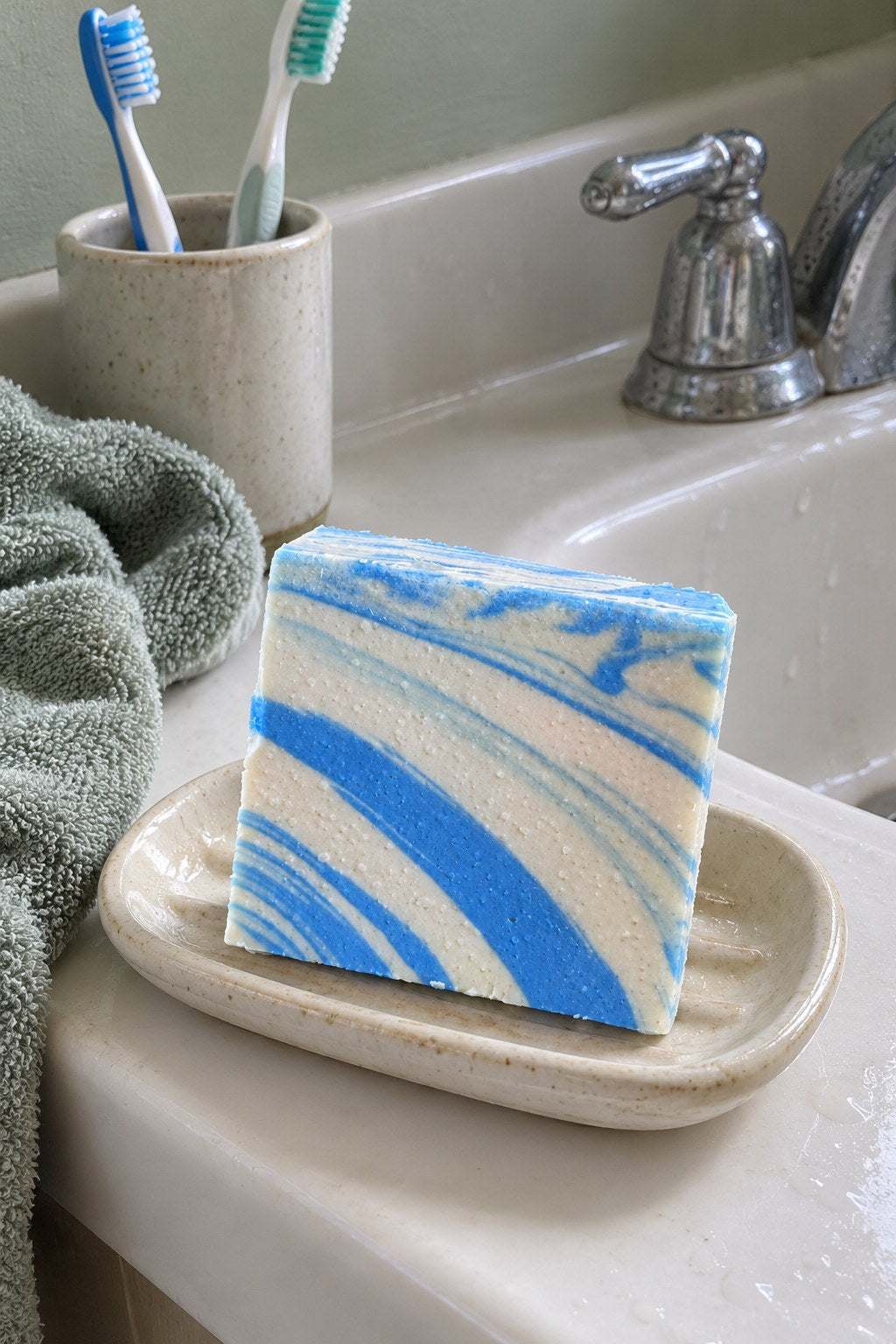
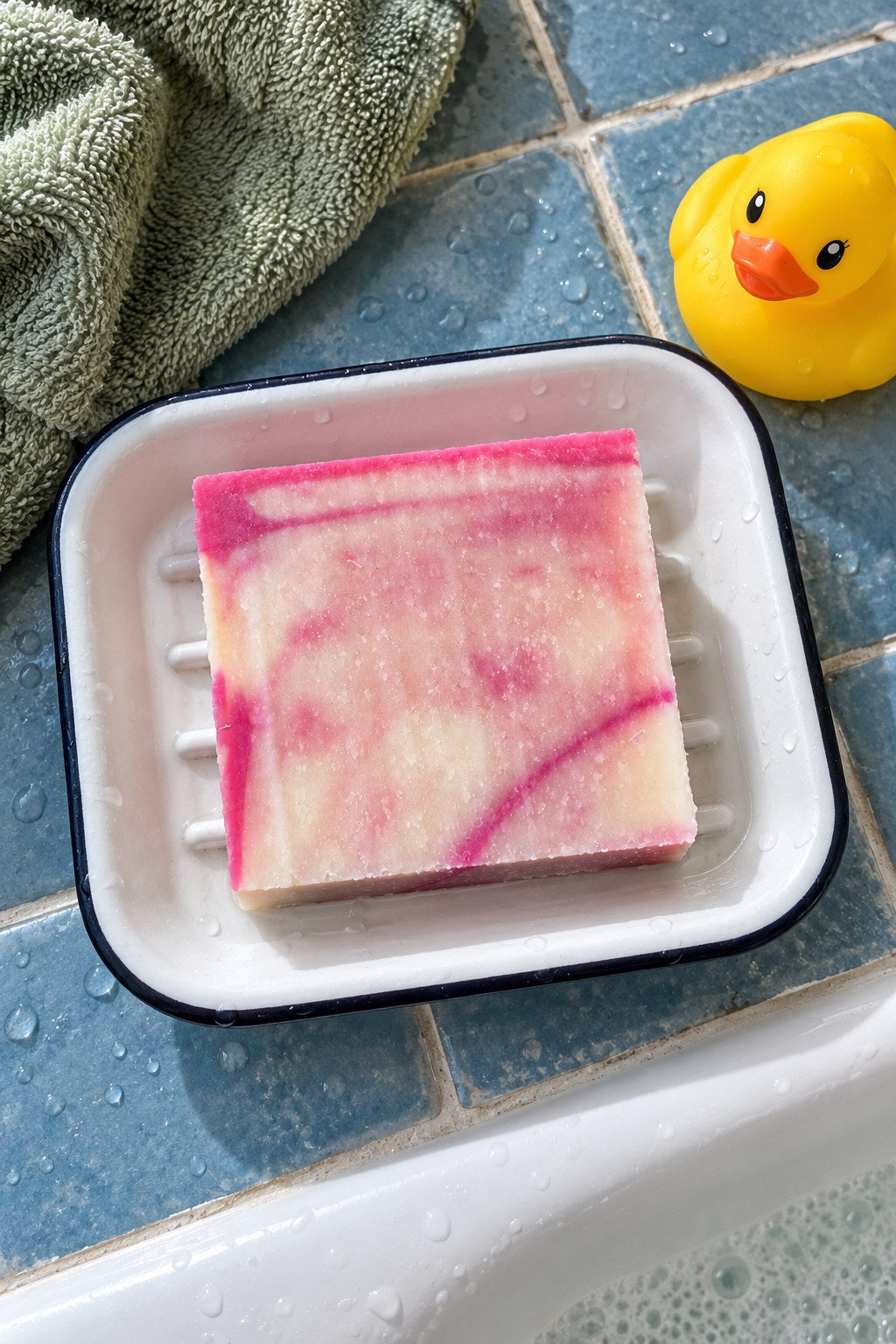
Neither format is automatically better. What's inside matters most. But most body washes are mainly water plus foaming detergents, preservatives and fragrance, while a well-made bar is concentrated, has fewer ingredients and doesn't need a plastic bottle. For a lot of people with dry skin, a gentle bar feels better.
I'm a soap maker, so you can guess which side I'm on. But I'll give you the real comparison, because the right answer depends on what's in the product, not just whether it comes in a bottle or a bar.
What's in a typical body wash
Look at the ingredient list on a bottle of body wash and the first ingredient is almost always water. After that come the cleansers (often sulfates like sodium laureth sulfate), thickeners to make it feel rich, preservatives (needed whenever a product contains water, so it doesn't grow mold or bacteria), and fragrance.
That's not automatically bad. Some body washes are very gentle. But many are built to foam a lot and rinse "squeaky clean," which can leave dry skin feeling tight.
What's in a bar
A traditional bar is made from oils and butters turned into soap, plus the glycerin that forms naturally in the process. There's very little water, so it needs fewer preservatives. A handmade bar's ingredient list is often short enough to read in a few seconds.
Bars can be harsh too, especially heavily perfumed or antibacterial ones. So read the label either way.
Is bar soap sanitary?
This is the question I hear most. Researchers have tested it for decades, including by putting bacteria on bars on purpose and then having people wash with them. They've found that bar soap doesn't pass germs from one person to the next in any meaningful way. Soap works by lifting dirt and germs off and rinsing them away, and the bar rinses clean too.
Simple habits help: rinse the bar after you use it and let it dry on a dish that drains.
Which one lasts longer?
A bar that's kept dry between showers lasts a surprisingly long time. A bar left sitting in water turns soft and disappears fast. With body wash, it's very easy to squeeze out more than you need.
What about the plastic?
Bars usually come in paper or no packaging at all. If you're trying to cut down on plastic in the bathroom, switching to bars for body and hair is one of the easiest changes you can make.
How to switch
- Lather the bar between your hands or on a washcloth instead of rubbing it straight on your skin, if you like a gentler wash.
- Use soap where you need it most (underarms, groin, feet) and rinse the rest.
- Keep your bar out of the direct spray and on a draining soap dish.
- Pay attention to how your skin feels after a week. Soft and comfortable is the goal.
Our family made the switch years ago and never went back. But the best choice is the one that leaves your skin feeling good.

What we use in our house
The Routine
Goat’s-milk body bars with no SLS, plus a face bar and a shampoo bar. Handmade on our farm in small batches.
See the Routine →
Lauren Stewart makes Tyme Soap by hand on our family farm in Idaho, with milk from our own goats.