
A retinol alternative is an ingredient that aims for some of the same results as retinol (smoother-looking, firmer-looking skin) without being vitamin A. The best-studied one is bakuchiol, a plant extract that did about as well as retinol for fine lines in a small 2019 study, with less redness and itching. Other plant-based options, like chicory root, are newer and have less research behind them. They're worth a look if retinol leaves your skin red, dry or flaky, if you have sensitive skin, or if you're pregnant and want to check with your provider first. They are gentler, not magic: use them consistently for a couple of months and keep wearing sunscreen.
Retinol comes up every time someone asks me about firmer-looking skin. It works for a lot of people. It also leaves a lot of people red, peeling and wondering what they did wrong. If that's you, there are gentler options, and it helps to know what they can and can't do before you buy one.
What does retinol do, and why do people look for alternatives?
Retinol is a form of vitamin A. Over time it can improve skin texture and make skin look smoother and firmer. The catch is the side effects. Cleveland Clinic dermatologist Dr. Shilpi Khetarpal says it's known to cause dry, irritated skin, and itching or burning for some people. It can also make skin more sensitive to the sun, which is why it's usually used at night.
That's why people go looking for something else: they want the smoother look without the peeling, or their skin just won't tolerate it.
What is a "retinol alternative"?
It's not a single ingredient. It's a loose label for ingredients that aim for some of the same visible results as retinol (smoother, firmer-looking skin, fewer visible fine lines) but aren't vitamin A. Most are plant-based. Some have solid research behind them. Some have very little. The label alone doesn't tell you which is which.
Do retinol alternatives actually work?
The best evidence is for bakuchiol, an extract from the babchi plant. In a small 2019 study that compared it head to head with retinol, bakuchiol did about as well for signs of aging over 12 weeks, and the people using it had less itching, redness and irritation. That's encouraging, though it was one small study, and it isn't proven to match prescription retinoids for more serious skin concerns.
Other plant-based options, like chicory root extracts (the one we use), are newer. Most of what's out there comes from the companies that make the ingredient, so I'd call the evidence early, not settled. Ingredients like these are usually one part of a formula alongside humectants and oils, and a lot of the softer, smoother feel you notice comes from keeping skin well hydrated.
A good rule of thumb: any "firming" product is about the look and feel of your skin, not changing it underneath. Give anything new 8 to 12 weeks of daily use before you decide, and keep wearing sunscreen every day. Sun protection does more for how your skin looks over the years than any cream.
Who might like a retinol alternative?
- People whose skin doesn't tolerate retinol. If you've tried it and ended up red, dry or flaky, a gentler option may be easier to stick with.
- Sensitive skin. Gentler ingredients are usually easier on reactive skin. Patch test anything new on your inner arm first.
- Pregnant or nursing. Retinoids are generally avoided during pregnancy. Plant-based options may be lower risk, but there isn't much research yet, so ask your provider before starting anything.
- Anyone who wants a simple, gentle step they can use morning or night without planning around it.
How to use one
- Wash gently. A mild cleanser and lukewarm water. Stripped, tight skin makes everything you put on afterward sting more.
- Serum first, if you use one, worked into skin in soft circles.
- Then the retinol alternative, a small amount over your face and neck.
- Seal it in with a moisturizer.
- Sunscreen in the morning. Every day.
Here's a simple face routine if you want the whole order in one place, and why dry and dehydrated skin need slightly different things.
Can you use it with retinol?
Many people do, especially bakuchiol, but there's no need to stack lots of strong products at once. If your skin is already irritated, take a break from the strongest thing in your routine and let it settle first. If you have a skin condition or you're using a prescription, ask your dermatologist.
The simple version
If retinol works for you and your skin is happy, there's no reason to switch. If it leaves you red and peeling, a gentler, plant-based alternative is worth trying. Bakuchiol has the most research, and newer options like chicory root are promising but less studied. Whatever you choose, be patient, keep your skin hydrated and wear sunscreen.

What we use in our house
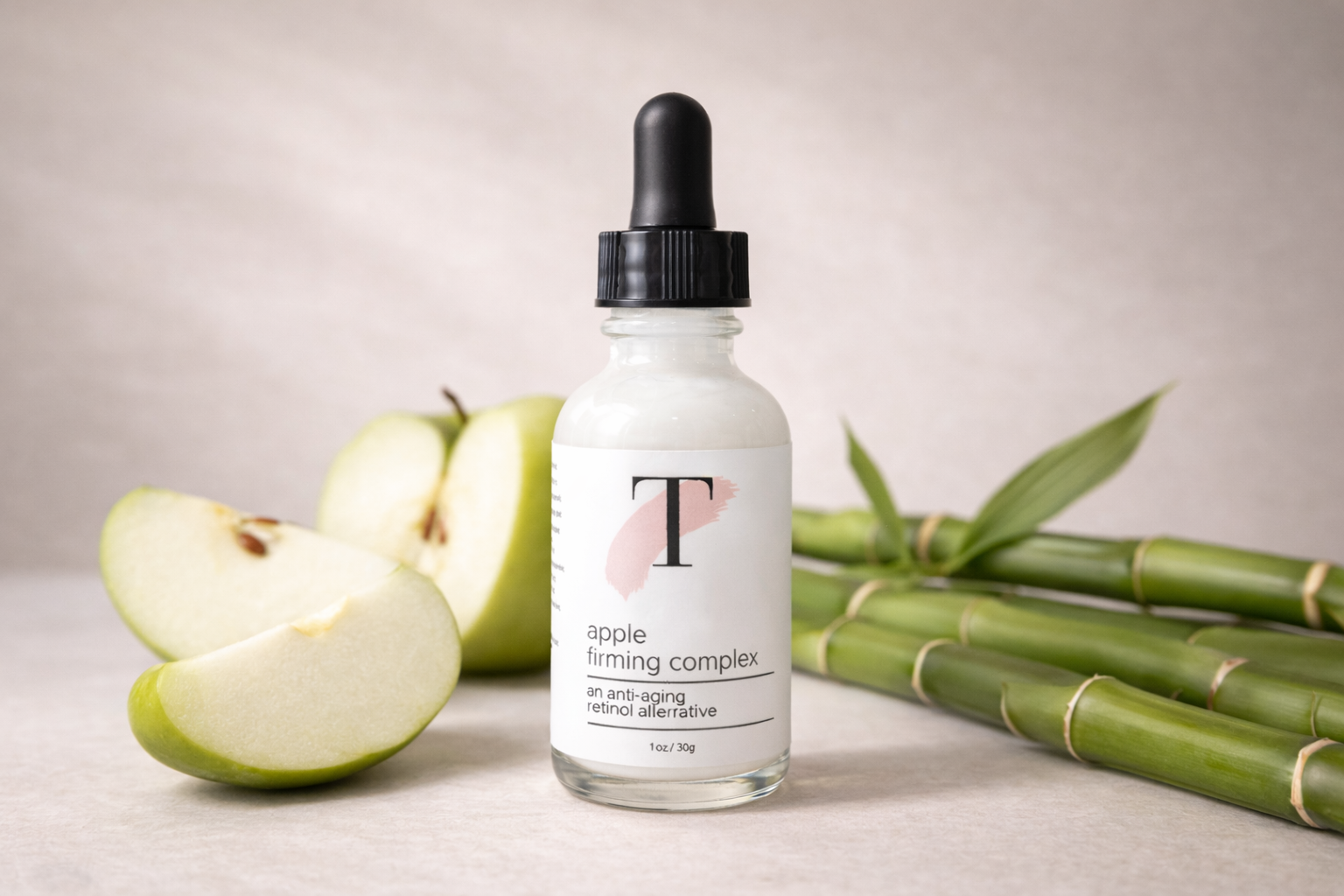
Apple Firming Complex
A lightweight cream-serum with Swiss green apple stem cells, bamboo and a botanical alternative to retinol (chicory root and tara). It hydrates and helps skin look firmer, smoother and more supple over time. Use it after serum and before moisturizer, morning or night.
See the Firming Complex →
Lauren Stewart makes Tyme Soap by hand on our family farm in Idaho, with milk from our own goats.